Older-Unit Care · Seasonal houses
Musty Smell in a Unit That Sat Closed: Clearing It for Good
A Sub-Zero switched off with its doors shut in a damp island house holds its moisture, and the smell that greets you in spring comes from it.
- Written by
- Bjorn Aaltonen
- Trade
- Refrigeration technician, 15 yrs
- Holds
- EPA 608 certified
- Dated
Where the smell has been living
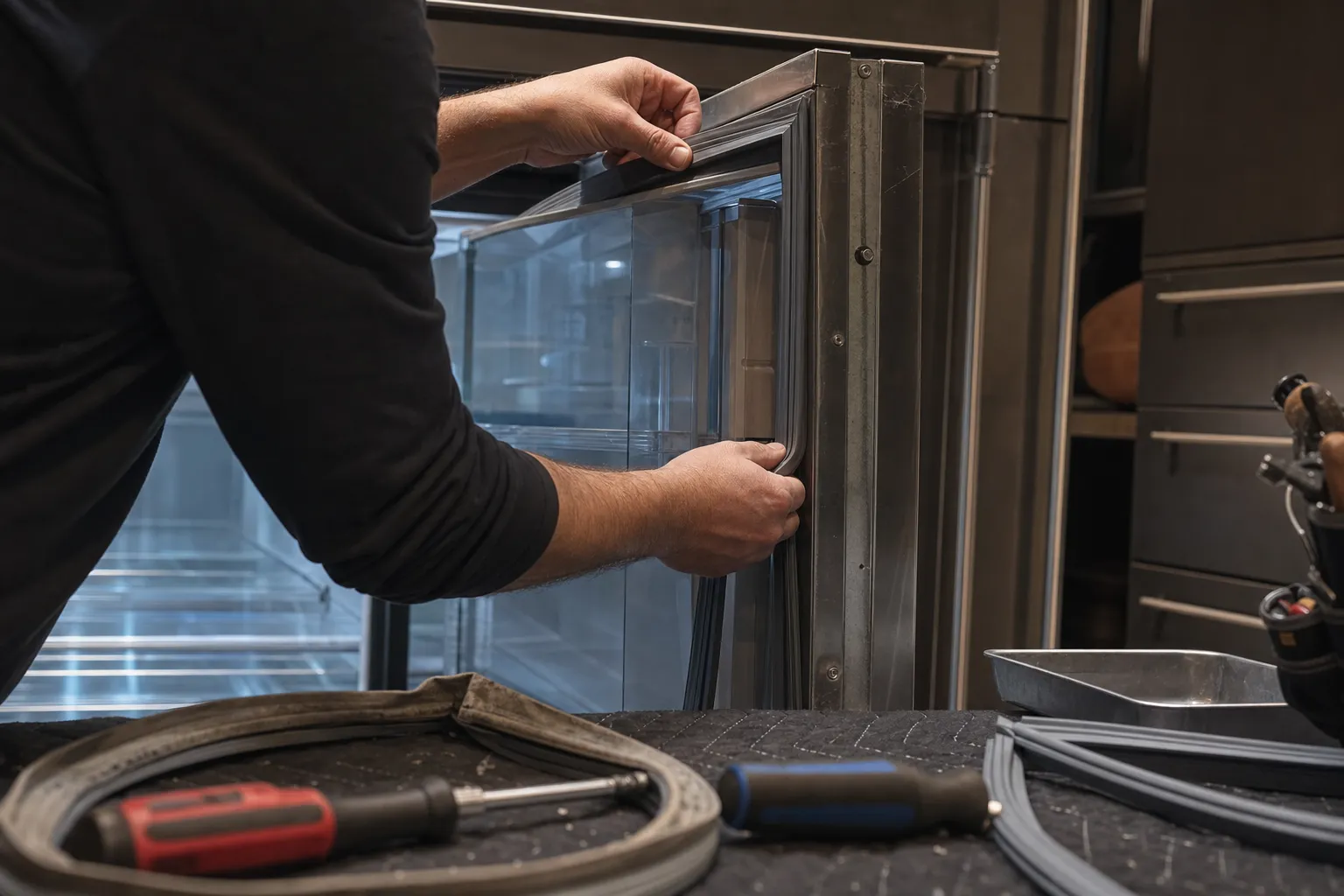
A musty smell in a unit that stood closed rarely comes from the air itself. It comes from the places that held water while the cabinet was dark and shut: the folds of the door gaskets, the shelves and their supports, and the defrost drain, where water runs from the evaporator into a trough, down a tube and into a pan underneath. The drawing above follows that path. Sub-Zero’s own list of odour causes includes standing water or foreign matter in the drain pan, clogged drain tubes, a cracked or torn door seal and an extended loss of power, and a unit switched off for a winter has had the last of those for months.
Cleaning it out properly
For a stubborn odour, Sub-Zero’s advice is to clean the whole interior, drain pan, tubes, gaskets and every crevice, with warm water, dish detergent and a capful of bleach. That mix is its method for odours specifically; for everyday interior cleaning the Classic guide asks for mild soap, water and baking soda, and rules out vinegar, rubbing alcohol and other alcohol-based cleaners. Rinse, dry every fold, and then, if you can, leave the doors blocked open with a fan running for several days, which Sub-Zero also suggests. On a Classic with air purification, its guide says to replace the cartridge if there is an odour inside.
When cleaning is not enough
If the smell survives all of that, it is usually somewhere an owner cannot reach. Sub-Zero describes taking the unit apart and cleaning the evaporator for the worst cases, and that is panel work for a technician, not for a Saturday afternoon.
What you can check yourself
- Hold each gasket fold open with a finger and look along its full length. Dark specks in a fold are the most common source, and the smell follows them.
- Take the shelves and drawers out and smell them away from the cabinet. If the odour goes with them, they are part of the problem, not just near it.
- On a Classic, take the drain pan out from behind the kickplate as its guide describes, and look for standing water or sludge in it.
- Look at the floor of the fresh-food compartment. Standing water there is on Sub-Zero's list of odour causes and often goes with a blocked drain tube.
- Run a finger along every gasket for cracks or tears. A damaged seal is another listed cause, and no amount of cleaning mends it.
Questions we get about this
- Will an open box of baking soda deal with it?
- Not on its own. Anything that absorbs smell helps after the cabinet is clean, not in place of cleaning. Sub-Zero's list is crumpled newspaper, charcoal briquettes or activated charcoal in a container, or fresh coffee beans, changed daily. Baking soda belongs in the wash water. If the smell is back within days, something is still holding it, usually a fold, a shelf or the pan.
- Can I clear the drain tube myself?
- The drain pan on a Classic, yes; its guide explains taking it out from behind the kickplate. The tube that carries defrost water down to the pan is another matter on most units, since reaching it can mean panels off. If water stands on the compartment floor, Driftwood Appliance Service, (206) 785-2960, can find out why the tube blocked.
- When does the smell mean a part has to be replaced?
- When the cleaning has been done properly and the smell keeps coming back to the same place. Sub-Zero notes that shelving may need replacing after a severe odour, and a cracked or torn door gasket is on its list of causes. The manufacturer recommends that a service technician fits a new gasket, so that part of the job is ours rather than the owner's.